

Getting the Wavelength Right: The Real Secret to UV Lamps
A lot of lamps out there call themselves “germicidal,” but that’s a pretty broad term. We obsess over a tiny, narrow window between 253.7nm and 254nm. Why? Because that’s exactly where DNA absorption peaks. If that peak shifts by even 5nm, you’re not just losing a little bit of power—you’re losing a huge chunk of your sterilization strength. It’s the difference between a tool that works and one that just glows.
The Glass Matters More Than You Think
We don’t use your run-of-the-mill glass. We stick with high-purity fused silica. Here’s the thing: standard quartz usually has impurities that act like a wall, blocking those 254nm photons from getting out. To compensate, some lamps have to run hotter just to get the same output. We control the OH- content in our quartz so the envelope doesn’t “eat” the light before it even reaches your target. And then there’s the electrodes. We’ve spent a lot of time calibrating the materials to stop “sputtering.” If you’ve ever seen a lamp develop a dark, cloudy film on the inside, that’s metal particles migrating to the glass. It kills your output. We use specific alloys to keep that glass crystal clear for as long as possible.
Power vs. Heat: The Balancing Act
It’s tempting to think more wattage equals better results. It doesn’t. If you cram too much current into a short tube, the mercury vapor pressure spikes. This actually shifts the spectral line and can tank your UV-C efficiency. It’s a delicate balance. We tune the voltage and current specifically to keep the plasma temperature right where it needs to be. Just a heads-up on your ballast settings: don’t over-drive these. If you push them too hard, you’ll fry the filaments way too early. We build these for a specific operating window. Stick to the specs, or you’ll see the lifespan drop off a cliff.
Fitting In
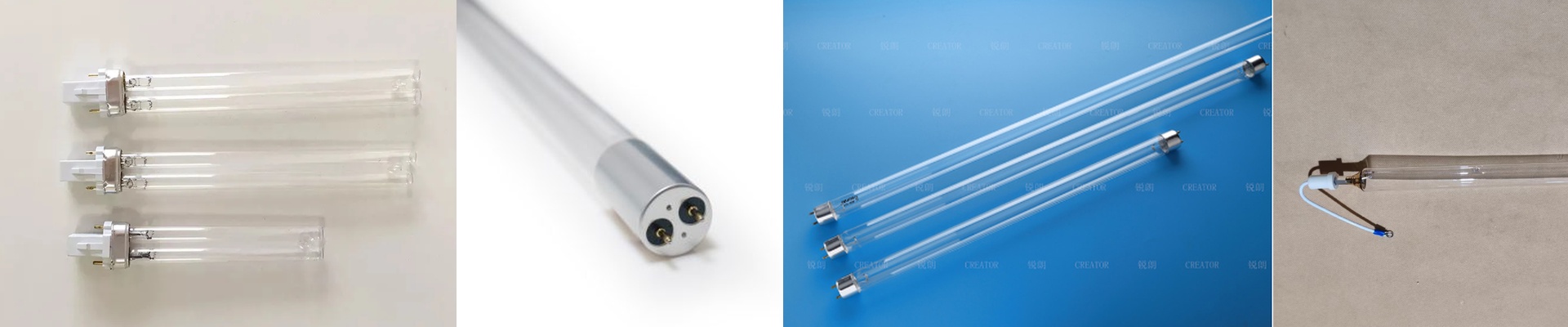
We make these to be simple drop-in replacements. Whether you’re using G13 or custom pin bases, the dimensions are locked down to the micron. Precision matters here because of your reflectors. If a lamp sits even 2mm off-center, the beam starts to diverge. Suddenly, you’ve got “dead zones” in your chamber where nothing is getting sterilized. We make sure the fit is perfect so the light goes exactly where you need it.