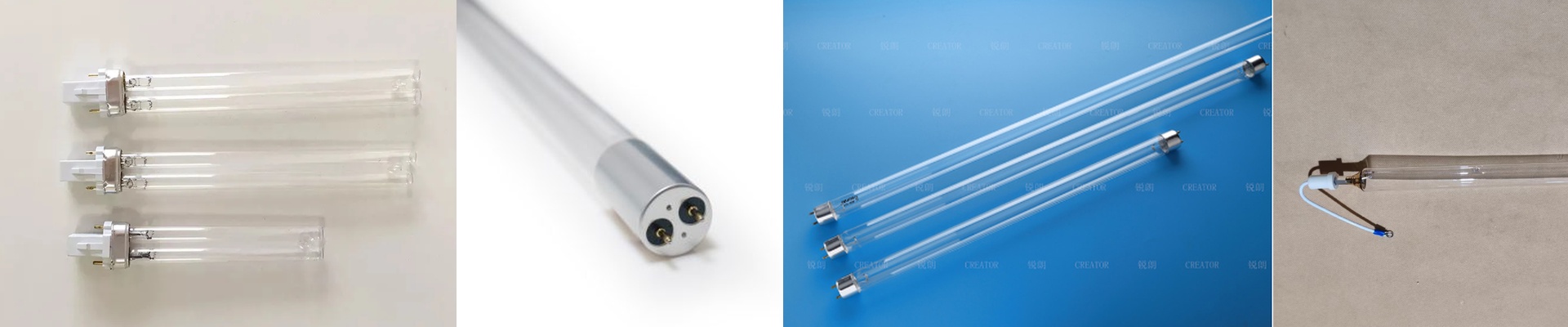
The Obsession with 0.5% Spectral Energy
Most UV lamp makers are fine with “close enough.” They hit a 2-3% variance and call it a day. For a lot of people, that works. But if you’re doing semiconductor lithography or high-precision curing, that tiny gap is a nightmare. It leads to uneven polymerization or those annoying “hot spots” that can trash an entire batch of parts. We spent the last few months chasing a 0.5% energy concentration window. It was a grind, but it’s worth it.
How we actually did it
Here’s the thing: you can’t just crank up the wattage to get this kind of precision. That’s not how physics works. Instead, we had to get obsessive about the gas mixture and the purity of the quartz envelope. We spent a lot of time tweaking the argon-mercury ratios and messing with the electrode geometry just to tighten that output curve. The problem is that if the arc wanders even a little, or the gas pressure fluctuates by a hair, your energy concentration just drifts away. To stop that, we tightened our vacuum sealing tolerances and switched to high-purity synthetic quartz. It’s a lot of extra work for a small number, but that’s where the quality lives.
The catch (because there’s always a catch)
Pushing for this level of accuracy brings a real-world headache: heat. To keep the spectrum tight, these lamps have to run at very specific temperatures. If your cooling system can’t hold a constant temp within ±5°C, that 0.5% precision is gone. It’ll be eaten for breakfast. You can’t just toss these into a generic housing and expect them to perform. You need a setup that can actually handle the thermal load.
Making it work in the field
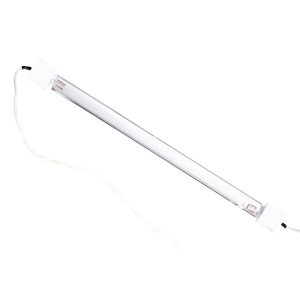
We designed these to be drop-in replacements for existing UV tunnels, but you’ve got to be careful with the wiring. We used reinforced connectors so you don’t deal with arc-over at the base. And a quick heads-up: make sure your ballast can handle the exact current draw needed to keep the plasma stable. This isn’t some plug-and-play bulb you buy at a hardware store. It’s a precision tool. If your voltage ripples, your spectrum shifts. Keep your power clean, and the lamp will hold the line.