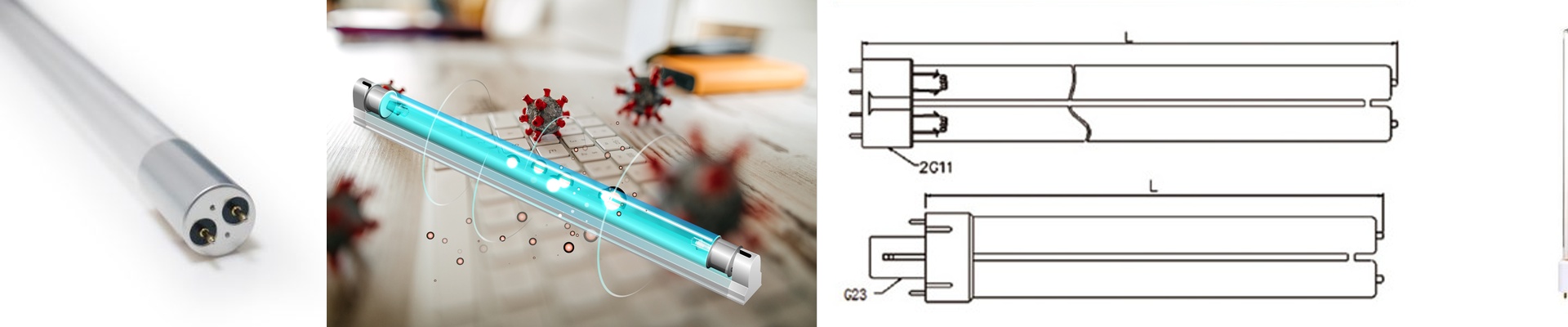
Getting Your UV Wavelength Exactly Right
We don’t just put together lamps. We’re really in the business of moving photons. In our lab, the whole goal is to tighten up that spectral output so it hits a very specific target. It’s not about making the light brighter. It’s about making sure the light actually “talks” to the photoinitiator or the chemical bond you’re trying to break. If they aren’t on the same page, nothing happens.
The Trick to Spectral Tuning
Getting a UV lamp to hit a precise wavelength is a bit of a balancing act. It comes down to the gas mixture and what we use for the electrodes. We spend a lot of time messing with the internal pressure and the ratio of mercury vapor to argon. If that pressure is off by even a tiny bit, the peak shifts. And that’s where the headaches start. Suddenly, your curing line slows to a crawl, or worse, you start burning the surface of your parts. To stop that from happening, we run everything through spectrophotometers. We make sure the peak is exactly where you need it before the lamps even leave our floor.
Why the Glass Matters
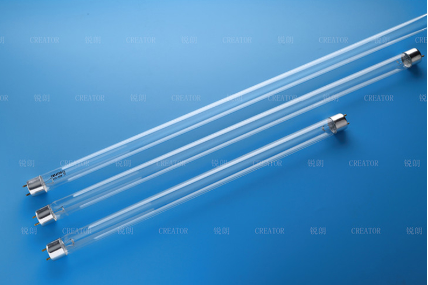
This is where most systems fall apart. Regular glass just blocks UV. Simple as that. We use high-purity synthetic quartz to keep the light moving. When you’re dealing with short-wave UV, the quartz has to be thin enough to let the light through, but tough enough to handle the heat. We’ve learned the hard way that thicker walls kill your efficiency. You might lose a little bit of “ruggedness,” but you get a massive jump in UVC transmission. It’s a trade-off that’s almost always worth it.
The Real-World Stuff
Here’s the thing: high-intensity UV creates a ton of heat. If you push for maximum power, that quartz tube is going to expand. If your mounting brackets are clamped too tight, the tube will just crack.**Leave about 2mm of wiggle room in your fixtures.**Trust me on this. Plus, you’ve got to make sure your cooling blowers can actually handle the IR byproduct. If they can’t, you’ll cook your substrates before the UV reaction even gets a chance to start. Also, use high-temp leads for your wiring. You don’t want your insulation melting into a puddle near the lamp ends.